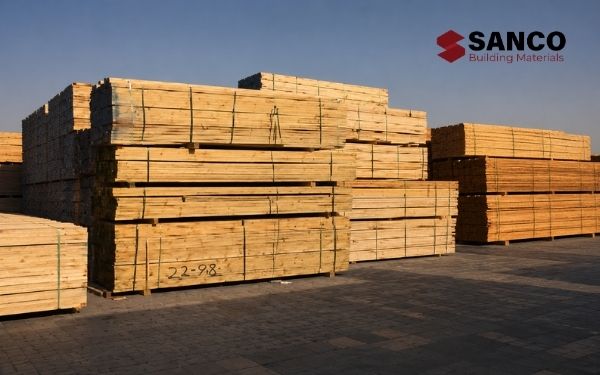
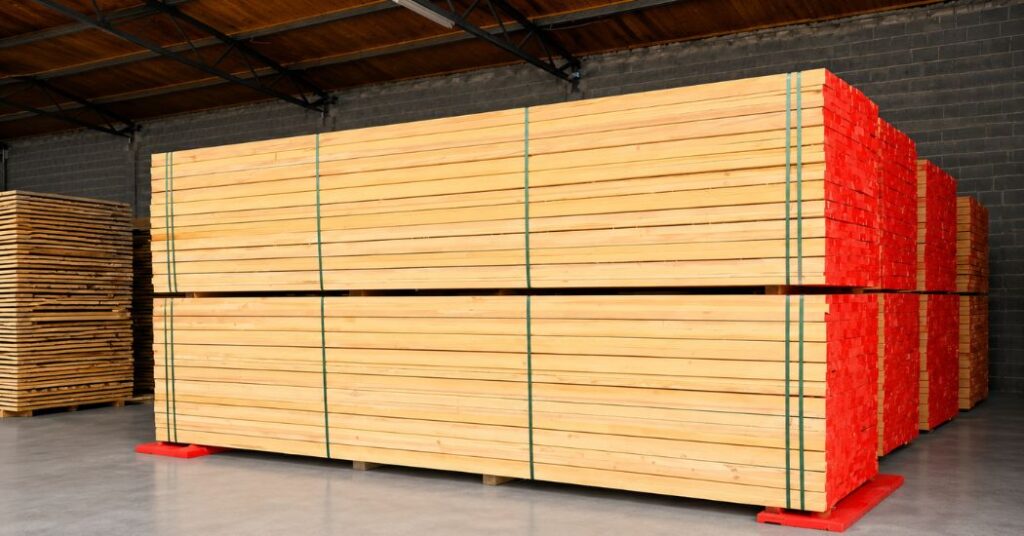
Whitewood timber UAE is one of the most commonly used materials in construction and woodworking. You will find it in building frames, false ceilings, furniture, formwork, and dozens of other applications across UAE job sites every day.
In simple terms: Whitewood is light-colored softwood timber — usually spruce, pine, or fir — used for construction framing, furniture, false ceilings, and joinery work across UAE projects.
But what exactly is whitewood? Where does it come from? And is it the right timber for your project? This guide answers all of that in simple terms.
What Is Whitewood?
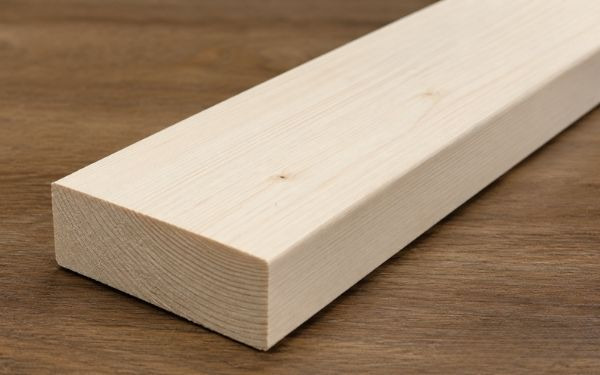
Whitewood is a general term that the timber industry uses to describe light-colored softwood lumber. It is not one single species of tree. Instead, the name refers to any softwood timber with a pale, creamy white color and a straight grain.
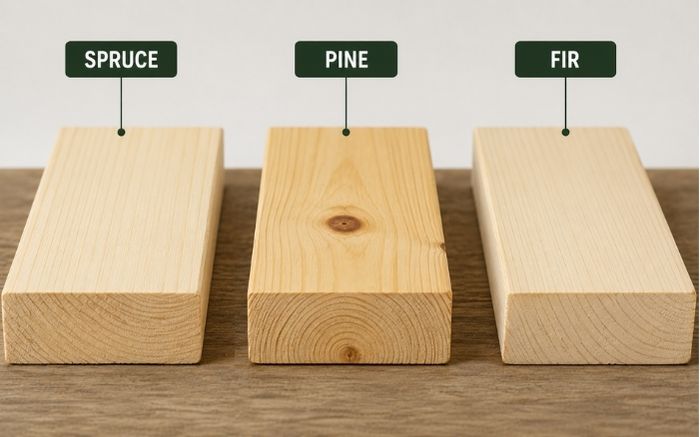
The most common species sold as whitewood are:
- Spruce — lightweight, strong for its weight, very common in construction
- Pine — slightly denser, widely used for framing and furniture
- Fir — stiff and straight, good for structural use
Moreover, many timber yards and building material suppliers across the UAE label whitewood as SPF timber — which stands for Spruce, Pine, and Fir. So when a supplier says SPF, they mean whitewood.
Where Does Whitewood Come From?
Forests in Europe, North America, and parts of Asia supply most of the world’s whitewood. The origin matters because it directly affects the quality, grading, and moisture content of the timber.
At Sanco Building Materials, we stock two of the most trusted whitewood varieties in the UAE market:
Canadian S4S Whitewood
S4S stands for Surfaced 4 Sides — meaning workers plane the timber smooth on all four sides before sale. As a result, Canadian S4S Whitewood offers consistent sizing, a clean finish, and low moisture content. Contractors and fit-out companies across Dubai and Abu Dhabi widely choose it for interior joinery, furniture carcassing, and fit-out work.
Austrian Whitewood
Austrian Whitewood comes from sustainably managed European forests. Furthermore, its tight grain and excellent straightness make it structurally reliable. Builders across UAE construction projects commonly use it for framing, false ceiling battens, and partition supports.
Is Whitewood a Hardwood or Softwood?
Whitewood is a softwood.
Fast-growing conifer trees like spruce, pine, and fir produce whitewood. Because these trees grow much faster than hardwood trees like teak or oak, whitewood is more affordable and widely available across UAE building material suppliers.
However, the word “soft” does not mean weak. In fact, whitewood has a good strength-to-weight ratio. This means it handles most construction and carpentry applications well while remaining light and easy to work with.
| Whitewood | Hardwood (e.g., Teak) | |
|---|---|---|
| Weight | Light | Heavy |
| Price | Affordable | Expensive |
| Workability | Easy to cut and shape | Harder to work |
| Best Use | Framing, joinery, furniture | Heavy-duty, outdoor, premium furniture |
| Availability | Widely available in UAE | Limited, imported |
As a result, softwood timber UAE like whitewood makes up the majority of timber used in construction globally — and the UAE market is no different.
What Is Whitewood Used For?
Whitewood for construction is one of the most practical and affordable choices available in the UAE. Below are the most common applications you will find on UAE construction and fit-out projects:
1. Partition Framing
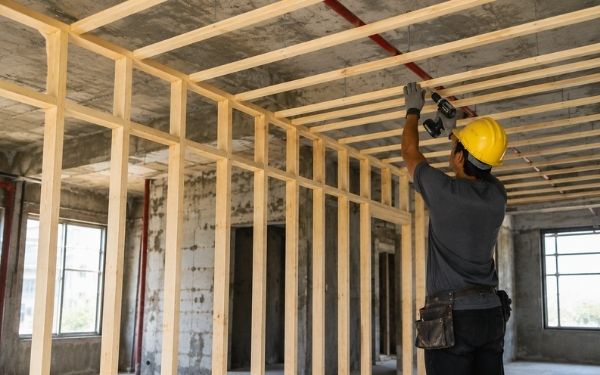
Carpenters use whitewood studs to build the internal frames of partition walls before fixing gypsum board on top. Because it is lightweight, workers can nail or screw it into place quickly and easily.
2. False Ceiling Battens
Contractors use whitewood battens as the supporting structure for false ceilings in offices, homes, and commercial spaces. Additionally, the straight grain of whitewood makes it especially ideal for this application.
3. Formwork and Shuttering Support
On construction sites, workers use whitewood as temporary support structures when pouring concrete. It is strong enough to hold the load and easy to remove once the concrete sets.
4. Furniture Making
Whitewood for furniture UAE is a popular choice among carpenters and manufacturers. Because it cuts, shapes, sands, and finishes easily, craftsmen use it to make shelves, cabinets, wardrobes, beds, and tables.
5. Door Frames and Interior Mouldings
The straight grain and smooth finish of whitewood — especially S4S graded timber — make it ideal for door frames, window linings, and decorative interior mouldings.
6. Packing and Crating
Across warehousing and logistics hubs in Jebel Ali, Dubai Industrial City, and other UAE free zones, companies use whitewood to build wooden crates and packing frames for shipping goods safely.
7. Site Hoarding and Temporary Structures
On active construction sites across Dubai and Abu Dhabi, site managers choose whitewood as their go-to material for temporary hoardings, barriers, and site support structures.
Is Whitewood Good for Outdoor Use?
Whitewood works outdoors, but proper treatment is essential before installation.
Untreated whitewood absorbs moisture easily. In the UAE, high humidity — especially in coastal areas like Dubai, Abu Dhabi, and Sharjah — combined with direct sun and intense heat causes untreated whitewood to warp, crack, or rot much faster than in cooler climates.
How to Prepare Whitewood for Outdoor Use
If you plan to use whitewood outdoors, follow these steps:
- Sand the surface before applying any finish
- Apply a primer to seal the wood grain properly
- Use an exterior-grade sealant or paint to protect against moisture and UV damage
- Avoid direct ground contact — place it on concrete or use a physical barrier to prevent moisture absorption from below
- Reapply the finish every 12 to 18 months depending on sun and rain exposure
For outdoor projects that face heavy rain or constant moisture, pressure-treated timber or naturally rot-resistant wood like cedar is a better long-term option.
Is Whitewood Treated?
By default, standard whitewood is not pre-treated — including the Canadian S4S and Austrian whitewood that Sanco stocks.
This means buyers receive natural, untreated softwood timber that is ready for indoor use, painting, staining, or finishing based on the project requirement.
However, if your project involves outdoor or high-moisture applications, ask your supplier specifically for pressure-treated timber. The pressure treatment process forces preservative chemicals deep into the wood, making it resistant to rot, insects, and moisture over time.
Quick answer:
- Standard whitewood = untreated, best for indoor use
- Pressure-treated whitewood = suitable for outdoor and high-moisture environments
Whitewood vs Other Timber Types
Whitewood vs Pine
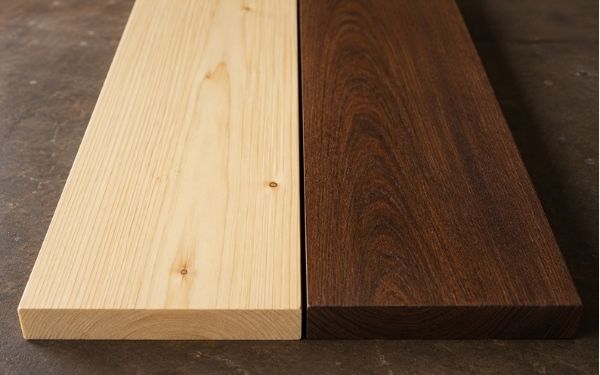
Although pine is often sold under the whitewood label, whitewood SPF and southern yellow pine are technically different products. Pine is generally denser and stronger, making it better for heavy structural work. Whitewood SPF, on the other hand, is lighter and better suited for interior framing and joinery.
Whitewood vs MDF
MDF boards are an engineered wood product with a very smooth, uniform surface. Whitewood, however, is solid timber. Therefore, MDF works better for flat panel surfaces like cabinet doors and shelving panels. Whitewood is the stronger choice for structural framing, battens, and applications that need a solid, load-bearing piece of wood.
Whitewood vs Plywood
Plywood consists of layered wood veneers and works excellently for sheet applications — flooring, formwork panels, and wall cladding. Whitewood, by contrast, is solid lumber for framing and linear applications. In fact, builders often use both products together on the same project.
Why Whitewood Is Popular in UAE Projects
Three main reasons explain why whitewood remains one of the top-selling timber types among building material suppliers in UAE:
1. Cost-Effective
Whitewood costs significantly less than hardwoods. For large construction projects where framing, battens, and temporary structures need timber, the cost saving is substantial. As a result, contractors and project managers consistently choose whitewood to keep material budgets under control.
2. Easy to Work With
Whitewood cuts cleanly, accepts nails and screws easily, and takes paint, stain, and sealant very well. Any carpenter or joiner can work with it using standard hand and power tools. Therefore, there is no need for specialist equipment or extra preparation time.
3. Readily Available
At Sanco Building Materials, we maintain consistent stock of Canadian S4S and Austrian whitewood in standard sizes. Furthermore, we deliver across all seven emirates — Dubai, Abu Dhabi, Sharjah, Ajman, Umm Al Quwain, Ras Al Khaimah, and Fujairah.
Frequently Asked Questions
What does whitewood mean?
Whitewood is a trade term for light-colored softwood timber — usually spruce, pine, or fir. The timber gets its name from its pale, creamy color and straight grain. Additionally, timber yards across the UAE label it as SPF timber.
Is whitewood strong enough for construction?
Yes. Whitewood handles most interior construction applications well — including partition framing, false ceiling battens, and formwork support. However, for heavy structural or permanent outdoor applications, a stronger or treated timber is more suitable.
What is the difference between whitewood and hardwood?
Whitewood is a softwood from fast-growing conifer trees like spruce, pine, and fir. Hardwood, on the other hand, comes from slow-growing trees like teak and oak. As a result, whitewood is lighter, more affordable, and easier to work with, while hardwood is denser and better suited for heavy-duty outdoor and premium furniture applications.
Is whitewood good for furniture in UAE?
Yes. Whitewood is a popular choice for furniture making across the UAE because it is easy to cut, shape, and finish. Moreover, it accepts paint and stain well, making it a practical and cost-effective option for indoor furniture like shelves, cabinets, and beds.
Which is better — Canadian whitewood or Austrian whitewood?
Both are high quality, but they suit different applications. Canadian S4S whitewood is best for joinery and furniture because of its smooth planed finish. Austrian whitewood, however, is better for framing and structural work because of its tight grain and straightness. The right choice depends on your specific project requirement.
How long does whitewood last?
Indoors and properly maintained, whitewood lasts for decades. Outdoors without treatment, however, it may begin to degrade within one to three years depending on moisture and sun exposure in the UAE climate.
Can you paint whitewood?
Yes. Whitewood accepts paint and stain very well. Simply sand the surface lightly, apply a primer, and then paint with your chosen color. Because of its light natural color, even light paint shades cover well with fewer coats.
What sizes does whitewood come in?
Whitewood comes in a range of standard sizes. Common dimensions include 2×2, 2×3, 2×4, 3×3, and 4×4 inches in lengths from 8 feet to 20 feet. Contact Sanco for current stock sizes and availability across UAE.
Where to Buy Whitewood Timber in UAE
Sanco Building Materials supplies high-quality whitewood timber to contractors, fit-out companies, furniture manufacturers, and builders across the UAE.
We stock Canadian S4S Whitewood and Austrian Whitewood with consistent availability and fast delivery to Dubai, Abu Dhabi, Sharjah, and all seven emirates.
📞 Contact us for bulk pricing, custom sizes, and delivery inquiries.